How to Organize Receipts for Taxes: The Complete 1099 Freelancer Guide (2026)
A practical receipt organization system for 1099 freelancers, with retention rules, Schedule C categories, audit prep, and a month-by-month workflow.

Most freelancers start organizing tax receipts after the year is over, when the records are scattered across email, paper bags, downloads, and bank statements.
The better system is boring in the best way. Capture the receipt when it happens, give it a category, keep the original proof, and review once a month. This guide is organization guidance, not tax advice, but it will help you show up to tax season with cleaner records.
What receipts self-employed freelancers should keep
Keep receipts that support income, deductions, credits, and business expenses on your return. For a freelancer, that often includes software, supplies, equipment, professional services, education, payment processing fees, advertising, travel, mileage support, phone or internet support, and home office records when applicable.
- The date of the purchase.
- The merchant or vendor.
- The total amount, including tax.
- What was purchased.
- The business purpose when it is not obvious.
Tax note
ReceiptNest helps organize records. It does not decide whether an expense is deductible. For deduction decisions, work with a qualified tax professional.
How long to keep tax receipts: periods and exceptions
The IRS says record retention depends on the action, expense, or event the document supports. In general, you keep records that support income, deductions, or credits until the period of limitations for the return runs out.
- Three years is the general period for many income tax records when special situations do not apply.
- Six years can apply if you do not report income that is more than 25 percent of the gross income shown on the return.
- Seven years can apply for records connected to a worthless securities loss or bad debt deduction.
- Unfiled or fraudulent returns can require records to be kept indefinitely.
- Employment and property records have separate retention rules. Other legal, insurance, and creditor requirements can also last longer.
Do not use a purchase date plus three years as an automatic deletion rule. Filing and payment dates, amended returns, property, and exceptions can change the period. Check the IRS retention guidance linked above and confirm your requirements before disposing of anything.
Digital receipts vs paper receipts
Digital records are normal business records now. IRS guidance says requirements that apply to hard-copy books and records also apply to electronic storage systems that maintain tax books and records. That means the important part is not whether the receipt started on paper. The important part is whether the record is complete, readable, and available when needed.
Paper receipts fade. Email receipts disappear under search terms you cannot remember. Downloads sit in folders named "misc." A good digital receipt system stores the original proof and the extracted details together.
Simple standard
If a stranger could understand what you bought, when you bought it, what it cost, and why it belonged to the business, your receipt record is much stronger.
The simple Schedule C category system
Freelancers often overcomplicate categories. You do not need a custom category for every vendor. You need categories that make monthly review and tax prep easier. Common Schedule C-style buckets include advertising, supplies, contract labor, office expense, legal and professional services, travel, meals, utilities, car and truck expenses, and other business expenses.
- 01Start broad: choose categories that match how the expense will be reviewed later.
- 02Keep merchant notes: a category alone may not explain business purpose.
- 03Review monthly: fix categories while the purchase is still easy to remember.
- 04Export before tax prep: hand your accountant organized records instead of a cleanup project.
Three ways to organize receipts for taxes
| Method | Pros | Cons |
|---|---|---|
| Shoebox | Fast at purchase time | Painful at tax time, easy to lose, paper fades |
| Spreadsheet | Flexible and familiar | Manual entry breaks the habit fast |
| Automated app | Captures photos, emails, PDFs, and categories in one place | Requires choosing and trusting a system |
The best method is the one you will still use in November. For many freelancers, that means an automated receipt app because the system removes the worst part: manual data entry after a long day.
A monthly receipt checklist for freelancers
- 01Forward email receipts from the month into your receipt system.
- 02Scan paper receipts from your wallet, car, desk, and bags.
- 03Upload PDFs from software subscriptions, contractors, and vendors.
- 04Review uncategorized receipts and fix obvious mistakes.
- 05Add notes for meals, travel, mixed-use purchases, and anything unusual.
- 06Export or back up the month before moving on.
This monthly habit turns tax prep from archaeology into review. You are not trying to remember January in April of the next year. You are maintaining a living record.
FAQ
Can self-employed people keep digital receipts for taxes?
Yes, electronic records can be used when they meet the same requirements as hard-copy records and are maintained while they are relevant for tax administration.
How long should freelancers keep receipts?
Many records should be kept at least three years, but some situations call for six years, seven years, indefinitely, or until after property is disposed of. When in doubt, keep the record longer and ask a tax professional.
What is the easiest way to organize 1099 receipts?
Capture receipts as they happen, categorize them monthly, keep the original file attached, and export records before tax prep.
Finally know where your money goes.
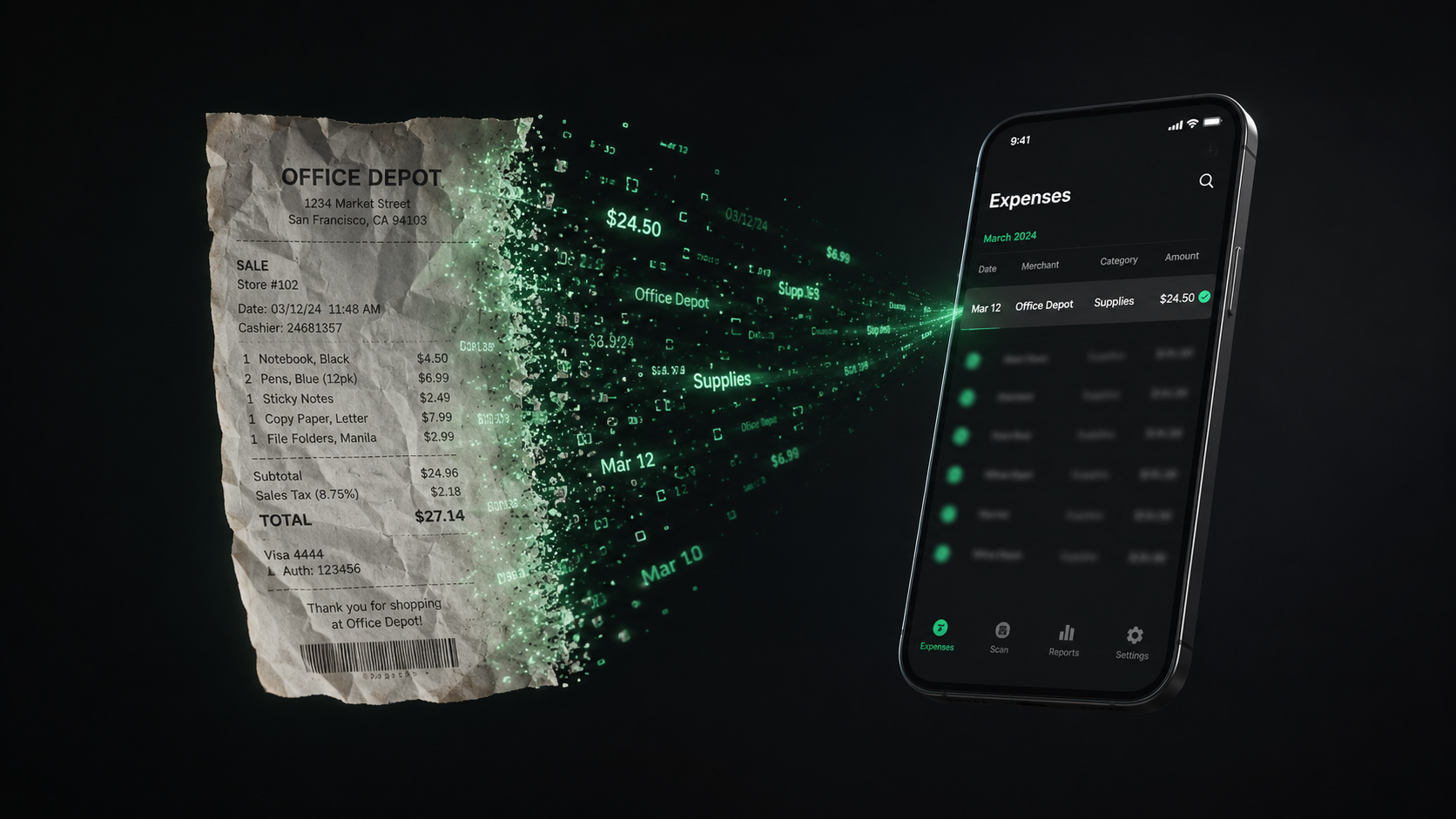
Snap a photo, forward an email, upload a PDF. ReceiptNest keeps everything organized automatically.