Where Does My Money Go? How to Finally See Your Spending Clearly (Without a Budget)
A calm, visibility-first approach to money clarity: see spending first, reduce avoidance, and make better decisions without beginning with a budget.

Where does my money go every month is not a failure question. It is a visibility question. Most people do not need more shame around money. They need a clearer picture of what already happened.
Budgets are plans. Visibility is evidence. If you cannot see where money went, it is hard to decide what should change next.
Why budgets fail before visibility exists
A budget asks you to predict and control. That can be useful later, but it is a difficult first step when your actual spending is invisible. Without receipts and categories, a budget turns into guessing.
The visibility-first approach is gentler and more useful: collect the record, review the month, notice patterns, then make decisions. Seeing comes before changing.
The psychology of money avoidance
Money avoidance is common because looking can feel like punishment. The first review may bring surprise, guilt, or frustration. But the feeling changes when the system is not judging you. It is just showing you the map.
Clarity before control
You do not have to fix everything the first week. The first win is being able to see the pattern without flinching.
The 10-second daily habit that compounds
- 01Capture the receipt before it leaves your hand.
- 02Forward the email receipt before archiving the message.
- 03Upload the PDF when you download it.
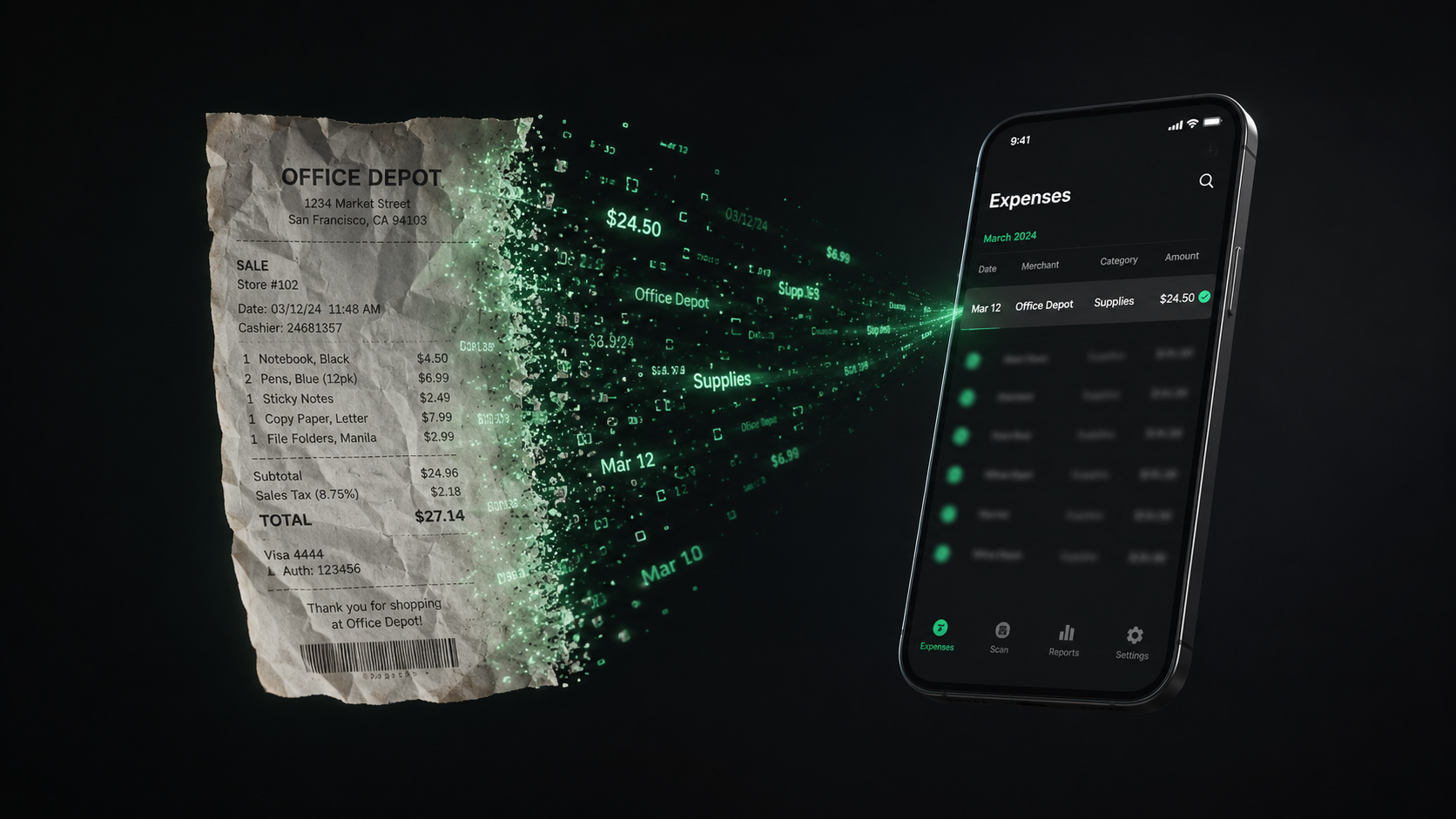
- 04Let the app extract details and category suggestions.
- 05Review the month once instead of re-entering every purchase manually.
Ten seconds is small enough to survive a busy day. After a month, it becomes a clear spending history. That is the compounding effect.
What people discover in the first month
The first month of tracking usually reveals boring truths that matter: recurring subscriptions, extra delivery fees, supply runs that happen more often than expected, small purchases that cluster around stress, and categories that feel minor until they are added together.
- Forgotten subscriptions and trial renewals.
- Small leak categories such as coffee, delivery, convenience purchases, and duplicate tools.
- Seasonal spikes that were not obvious from memory.
- Business expenses mixed into personal spending.
- Receipts needed later for returns, warranties, taxes, or reimbursement.
From seeing to deciding
Once spending is visible, decisions become less dramatic. You can cancel what you do not use, plan for what repeats, separate business purchases from personal ones, and stop arguing with a vague feeling that money disappeared.
ReceiptNest is built around this philosophy. Capture first. Organize automatically. Review calmly. Decide from the record.
FAQ
How can I see where my money goes every month?
Track the receipts and records behind spending, group them by month and category, and review the totals regularly before trying to build a strict budget.
Do I need a budget to understand my spending?
No. A budget can help later, but visibility comes first. Start by capturing receipts and reviewing actual spending patterns.
Why do small purchases feel invisible?
Small purchases are easy to forget one by one. They become visible when receipts are grouped by category and month.
Finally know where your money goes.
Snap a photo, forward an email, upload a PDF. ReceiptNest keeps everything organized automatically.