
Organize tax receipts for your accountant.
Bring paper, PDF, and email receipts together before your tax appointment. Review each purchase, keep the original, and export a monthly CSV to share alongside your supporting records.
Pick one month. Gather the originals, check the summary, and make a short list of what is still missing.
Up to 50 receipts on Starter. CSV export included. View plan details.
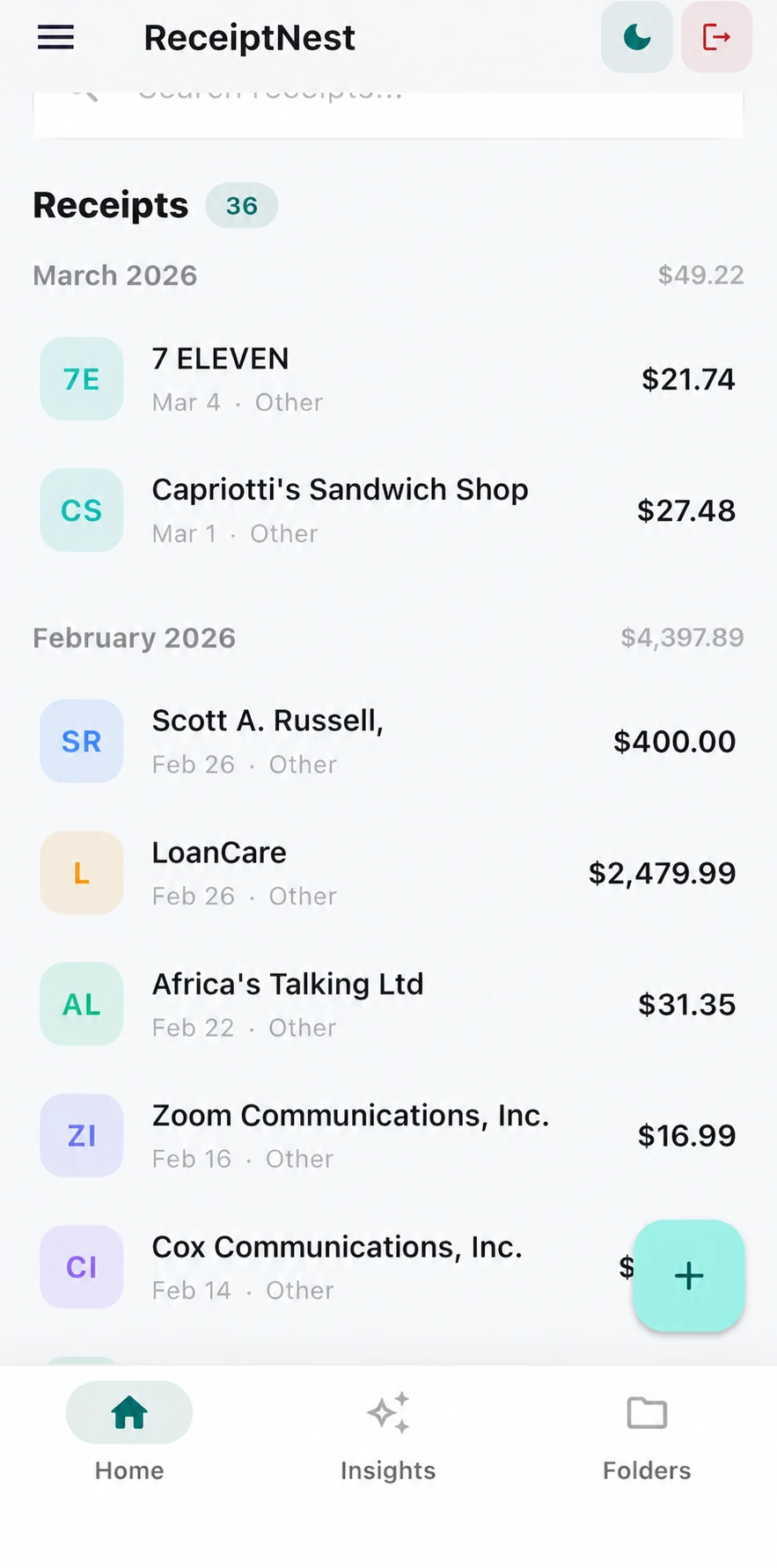
Prepare a handoff your accountant can review.
- 01
Collect the original supporting records
Save the receipt while you have it and retain other documents that establish payment or business purpose. A receipt summary alone may not explain what you bought or how it relates to your work.
- 02
Review details throughout the year
Check merchants, dates, totals, and categories regularly. Keep explanations for mixed-use or unusual purchases with your supporting records, and ask a qualified tax professional about treatment rather than relying on a category label.
- 03
Prepare the handoff your tax professional needs
Confirm the period, export columns, and original documents they need. Review the CSV and keep other required business records. ReceiptNest helps organize receipts; it does not prepare or file your tax return.
What a receipt handoff can look like
A fictional September handoff for a U.S. freelancer. Ask your accountant which records and format they want.
| What you send | Example |
|---|---|
| Period | September 1–30, 2026 |
| Original documents | Three readable receipts: office supplies, software renewal, and a print job |
| Reviewed CSV summary | Merchant, date, and amount checked against the originals; $49.22 total |
| Open questions | One separate card charge still needs a duplicate receipt; state what you know and what you tried |
A combination of documents may be needed. See the IRS recordkeeping guidance linked below.
Digital does not mean disposable
Electronic records need to remain readable, complete, and accessible for the applicable period. Keep suitable backups and originals where required. Check the IRS guidance and your professional's advice before discarding documents.
Retention is not one universal number
How long to retain a record depends on the return, transaction, and circumstances. Some records need to be kept longer than the general period. The linked freelancer guide explains a practical organization routine and points to the official retention rules.
ReceiptNest is receipt-organization software, not tax or accounting advice. Review important details against your original records.
Before you choose
Does ReceiptNest decide which purchases I can deduct?
No. It helps collect and organize receipts. A category or export does not establish deductibility, and the app is not tax-filing software.
Can I keep digital receipts for US tax records?
Electronic records must meet applicable recordkeeping requirements. Keep them complete, readable, and accessible, and consult IRS guidance or your tax professional for your situation.
Are bank statements enough?
A statement can show a payment but may not establish the item purchased or business purpose. Additional supporting documents may be needed.
Will the CSV be enough for my accountant?
Ask them which fields and documents they need. The monthly CSV is a purchase summary, not a substitute for every supporting record.
Take the next useful step
Try it with a receipt of your own.
Start with a few records, check the results, and see whether the workflow fits. Up to 50 receipts on Starter.
Start organizing tax receiptsCompare plans